I am a PhD researcher at the Technical University of Munich (TUM), where I joined the Machine Learning and Information Processing Lab in June 2026 under the supervision of Prof. Reinhard Heckel. My research explores agentic AI for medical imaging: AI systems that can plan, use tools, and act autonomously across medical imaging applications.
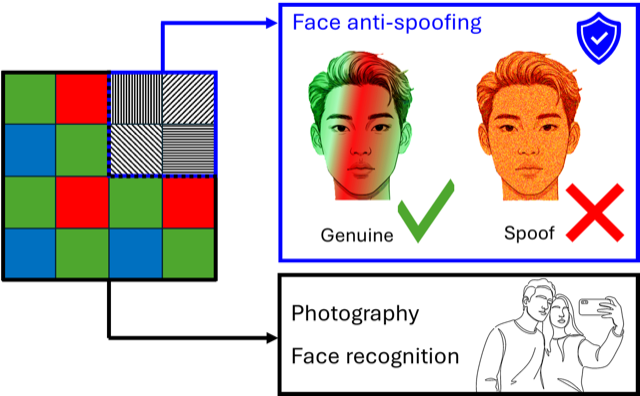
Before TUM, I received my M.Sc. and B.Sc. in Electrical Engineering from Tel Aviv University. My M.Sc., a joint industrial program with Samsung Corephotonics advised by Prof. David Mendlovic, focused on polarization imaging for face anti-spoofing, resulting in a first-author IEEE Sensors Journal paper and a patent. In parallel, I worked as an Image Quality Engineer at Samsung Corephotonics on ISP tuning, image quality assessment, and camera-sensor evaluation.
Started my PhD at the Technical University of Munich in the MLI Lab, supervised by Prof. Reinhard Heckel.
Paper presented. Our work on sparse polarization pixels for face anti-spoofing was presented at Israel Computer Vision Day 2025.
Paper published in IEEE Sensors Journal: sparse polarization pixels for face anti-spoofing.
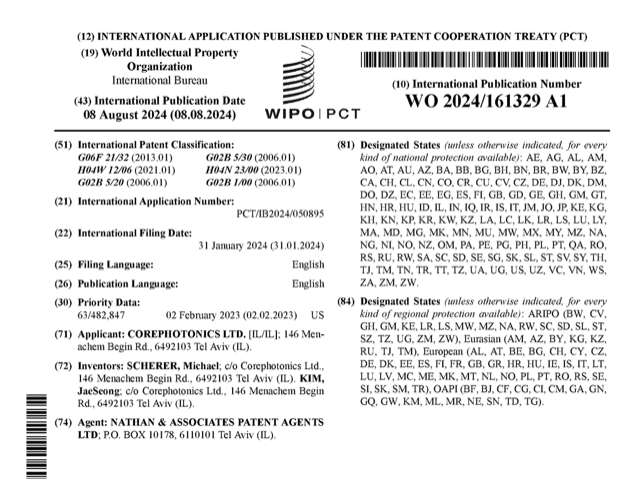
Patent published on compact face identification polarization cameras (WO2024161329A1).
Publications
On the Effectiveness of Sparse Linear Polarization Pixels for Face Anti-Spoofing
JaeSeong Kim, Abraham Pelz, Michael Scherer, David Mendlovic
IEEE Sensors Journal, 2025
Sparse linear polarization pixel architectures for face anti-spoofing on mobile devices, enabling effective liveness detection with minimal sensor modifications.
Face Anti-spoofing using Full Polarization CharacteristicsSamsung Corephotonics Lecture Club
Enhanced Face Anti-spoofing using Angle of Linear PolarizationTel Aviv University, Electrical Engineering Student Seminar
Camera Technologies: Multimodal Cameras & Image Quality AssessmentKorean Embassy in Israel Research Seminar
Projects
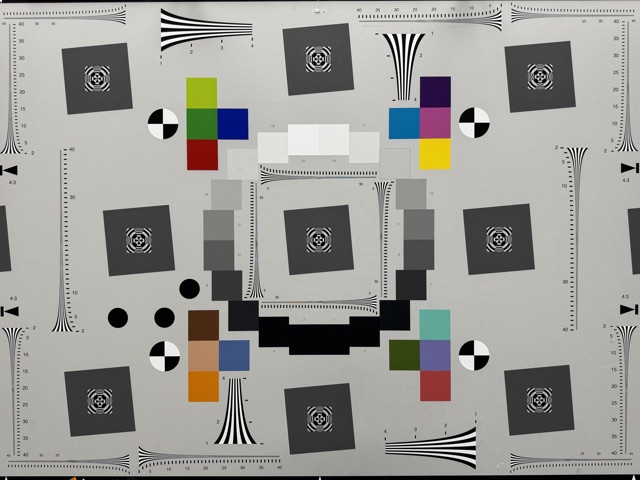
FOV Measurement Tool
Automated tool for computing a camera's horizontal, vertical, and diagonal field of view from reference chart dimensions and measured distance, for accurate lens specification.
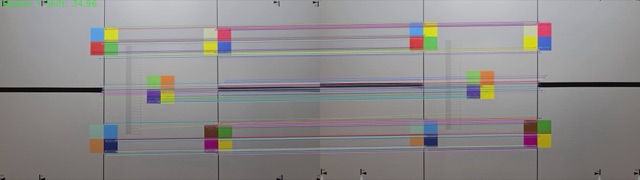
Analyzes video of a camera oscillating in front of a test chart to quantify Electronic Image Stabilization (EIS) angular correction and motion blur, giving an objective measure of stabilization performance.
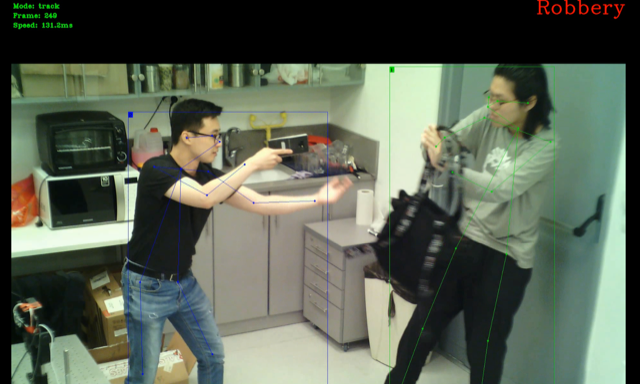
Surveillance system that classifies ten types of crime from video using CNNs, with a two-stage architecture: anomaly detection followed by skeletal movement pattern analysis.